
- Joined
- Sep 28, 2026
- Messages
- 2
- Reaction score
- 0
- Points
- 1
- Age
- 42
- Model
- CHOOSE
Hello everyone. My name is Ryan, and I got deeply involved in researching internal outboard corrosion after buying a boat that had suffered a serious corrosion failure.
That research eventually led me to develop WaterDog Outboard Savers, so I want to be completely upfront that I own the company. I am not here to spam product links or turn every discussion into a sales pitch.
I have spent the last couple of years studying outboard corrosion, cooling systems, thermostats, sacrificial anodes, internal scale, and doing my own testing along the way. I joined because I enjoy talking about this stuff and hopefully some of what I have learned can help other boat owners avoid the kind of failure that got me started.
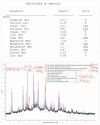
The first thing I wanted to share is a laboratory analysis of a sample of the internal scale taken from an outboard engine. One of the things that surprised me was that the sample contained only about 2% calcium and 0.19% sodium. Most of it was made up of corrosion products involving metals from the engine, along with hydroxides and minerals from the water.
I am happy to respect whatever rules the moderators have regarding businesses or vendors. Thanks for having me.
That research eventually led me to develop WaterDog Outboard Savers, so I want to be completely upfront that I own the company. I am not here to spam product links or turn every discussion into a sales pitch.
I have spent the last couple of years studying outboard corrosion, cooling systems, thermostats, sacrificial anodes, internal scale, and doing my own testing along the way. I joined because I enjoy talking about this stuff and hopefully some of what I have learned can help other boat owners avoid the kind of failure that got me started.
The first thing I wanted to share is a laboratory analysis of a sample of the internal scale taken from an outboard engine. One of the things that surprised me was that the sample contained only about 2% calcium and 0.19% sodium. Most of it was made up of corrosion products involving metals from the engine, along with hydroxides and minerals from the water.
I am happy to respect whatever rules the moderators have regarding businesses or vendors. Thanks for having me.