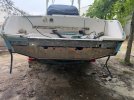
How hard can it be?
Google AI:
For a
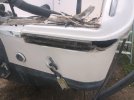
1997 Grady-White Islander with twin outboards using
Coosa board and
epoxy, the
inside method is highly recommended. Grady-White boats feature a heavy, reinforced exterior fiberglass skin and integrated splashwells that provide critical structural rigidity for twin outboards. Cutting from the outside would destroy the structural integrity of that thick outer skin, making it incredibly difficult to safely rebuild the high strength required for twin engines.
Using
Coosa board (Bluewater 26) and
epoxy resin provides a completely rot-proof, high-strength upgrade over the original factory plywood. [
1]
Recommended Transom Thickness
- Target Total Thickness: 2.25 inches to 2.5 inches of total core thickness (excluding the fiberglass skins).
- Core Build: Use two layers of 1.25-inch Coosa Bluewater 26, or three layers of 0.75-inch Coosa board laminated together with epoxy and 1708 biaxial cloth.
Step-by-Step Rebuild Blueprint
1. Deconstruct the Interior
- Remove the twin outboards, steering lines, fuel filters, and all transom hardware.
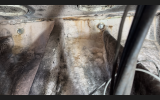
- Cut out the interior splashwell and the rear storage boxes using a cutting wheel.
- Save the removed fiberglass sections; you will fiberglass them back into place later.
- Cut back the rear 12 to 18 inches of the stringers where they meet the transom to gain full access. [1]
2. Gut the Rotten Core
- Use a circular saw set to the exact depth of the inner skin to score the inner fiberglass.
- Pry off the inner skin to expose the rotten wood core.
- Use a chainsaw, chisel, and an angle grinder with a 24-grit flap disc to scrape out the old wood.
- Grind the inside of the outer fiberglass skin until it is completely clean, dry, and scuffed up for bonding.
3. Fabricate the Coosa Core
- Create a precise template of the transom shape using large cardboard pieces or cheap plywood.
- Trace the template onto your Coosa boards and cut them out using standard woodworking tools.
- Dry-fit the Coosa pieces inside the boat to ensure they slip in perfectly with a 1/4-inch gap around the perimeter. [1, 2]
4. Laminate and Bed the Core
- Mix your epoxy resin and coat all mating surfaces of the Coosa boards to prevent dry joints.
- Mix epoxy with a thickening agent (like cabosil/fumed silica and wood flour) to create a peanut-butter-consistency paste.
- Apply the thickened epoxy to the outer hull skin and between the Coosa layers.
- Clamp the Coosa layers tightly against the outer hull skin using heavy bolts through the engine mounting holes and 2x4 lumber as clamping bars.
5. Structural Fiberglassing
- Fillet all the 90-degree edges around the perimeter of the new core using thickened epoxy to create smooth radiused curves.
- Lay down at least three to four layers of 1708 biaxial fiberglass cloth over the new Coosa core, overlapping each layer onto the original sides and bottom of the hull by an extra 2 inches per layer (e.g., 2-inch, 4-inch, 6-inch overlaps).
- Reattach and fiberglass the stringers back to the new transom core to tie the structure together. [1]
6. Reinstall the Splashwell
- Put the original splashwell fiberglass unit back into position.
- Secure it by glassing the seams from the underside and blending the top seams with epoxy fairing compound.
- Sand, prime, and paint the interior cockpit areas to match the original finish.
Wet stringers:
If the core wood inside your Grady-White stringers is
wet but still solid and not rotted (mushy), you do not necessarily have to rip them out. If the wood hasn't structurally degraded, it can still hold the compression loads required for those twin outboards. [
1,
2,
3]
However, you cannot leave the moisture trapped inside. Sealing wet wood with epoxy will cause it to rot rapidly because the moisture has nowhere to escape. You have two primary paths forward: [
1,
2]
Option 1: The "Dry and Seal" Method (Best if you have time) [
1]
If the wood shows 100% solid resistance when you drill into it (no soft spots), you can dry it out and save the structural core. [
1]
- Drill Weep/Vent Holes: Drill a series of 3/8-inch holes along the top and sides of the fiberglass stringer skin, spaced about 4 to 6 inches apart, targeting the wettest zones. [1]
- Bake the Hull: Set up a dehumidifier inside the boat, tent the entire bilge area with plastic sheeting, and place a safe heat source (like incandescent work lights or a small space heater) near the stringers. [1]
- The Waiting Game: It can take weeks to fully pull deep moisture out of encapsulated marine plywood. Use a pin-style wood moisture meter in the drilled holes. Do not attempt to seal the stringers until the moisture level drops below 12%. [1, 2]
- Stabilize and Seal: Once completely dry, use a syringe to inject a very thin, low-viscosity penetrating epoxy (like TotalBoat Clear Penetrating Epoxy) into the holes. It will soak deep into the dry wood pores, hardening the fibers. Inject thickened epoxy paste to fill any remaining voids, then lay a new strip of 1708 biaxial cloth over the drilled areas. [1, 2, 3, 4]
Option 2: The "Hollow Form" Method (Safest for Twin Outboards)
Because this is a heavy 1997 Grady-White carrying the immense torque of twin outboards, many builders choose not to trust dried wood. They use a method where the original wood becomes irrelevant. [
1,
2]
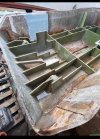
Grady-White factory stringers are incredibly thick fiberglass layups. The fiberglass skin itself carries a massive amount of the structural load, while the wood acts primarily as a "form" to shape the fiberglass during manufacturing. [
1,
2]
- Grind and Prepare: Leave the wet wood inside, but aggressively grind the outside of the existing fiberglass stringers down to clean, raw glass. [1]
- Overbuild the Fiberglass Skin: Disregard the strength of the inner wood entirely. Turn the stringer into a solid fiberglass girder by wrapping 3 to 4 additional layers of 1708 biaxial cloth directly over the outside of the old stringers.
- Tie Into the Transom: Ensure these new structural layers extend heavily onto your new Coosa transom. Bending the new glass 8 inches onto the transom face physically locks the transom to the hull sides using the stringer as a giant bracket. [1]
If the wood rot never starts because it's starved of oxygen by the new epoxy seal, the overbuilt fiberglass skin will safely support the twin outboards on its own strength.