?Problem with AGM batteries in new Grady White boats

drm1

Member
Joined
Jul 17, 2021
Messages
19
Reaction score
1
Points
3
Age
71
Model
Freedom 275
I have a new 2025 Freedom 285 with 65 hours on the engines. I got a sudden 11V battery warning on my Garmin chartplotter. After 28 hours of shore power the batteries are not charging (I have a ProSportHD20 battery charger). I don’t know if it’s a charging problem (the ProSport is correctly recognizing the AGM batteries however) or bad batteries. The dealer plans to replace the AGMs with flooded batteries. Good idea?
Also anyone else have a similar experience?
I had a previous Freedom 275 new build in 2022 with no similar issues.
 
You should load test the batteries first to se if any are shot.

There are lots of possible reasons for your low voltage warning but you didn't provide enough info to diagnose.
For example, How many batteries in total, how many charging ports? ( The Pro Sport 20 is a 2 bank charger and if you have more than 2 batteries, may not be the best option to maintain charge on all batteries) What lights on the charger are lit and are they blinking?

If you get the warning when you start a motor, that is a common occurrence and is probably a weak battery (house). If you have added accessories since purchase and the warning recently started after adding loads ( like a amplifier/stereo head end) you factory wiring may be under-sized for the load.
What were you doing and what were the motors doing when you got that alarm? ( Motors off, cruising, starting one or both motors)

Lots of possible causes.
 
I have had a number of ProMariner chargers over the years. First thing I would check is the inline fuses at each of the batteries. I cooked several of them on different units. They load shift and if certain batteries are run down the amperage would heat up the cheap fuse holders and they would fail. You could grab the fuse after a day on the water when at the dock and feel them being hot. I replaced all glass fuses with ceramic ones. On some units I replaced the fuse holders.

The last one I replaced with a ProSportHD20 3-bank and it has been trouble free. Over time they seemed to have figured things out.

What you should do is put a voltmeter on the battery while last the dock and charging. Should be around 14 volts. Without the charger your battery should reach 12.8 volts. Turn off the charger and start the engines. Check all three batteries voltage. Any one that is charging should be around 14 volts. One engine should be charging the house battery too.

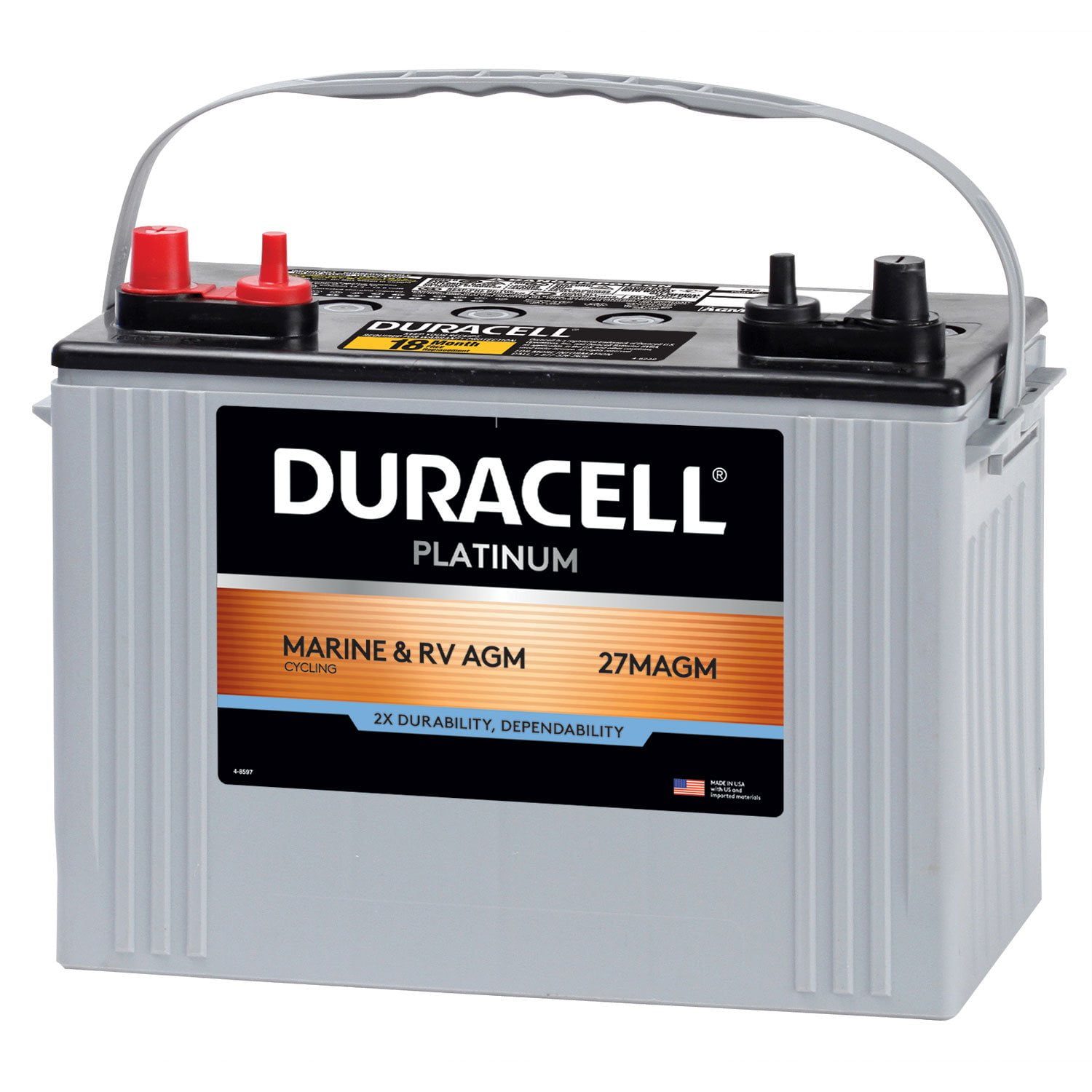
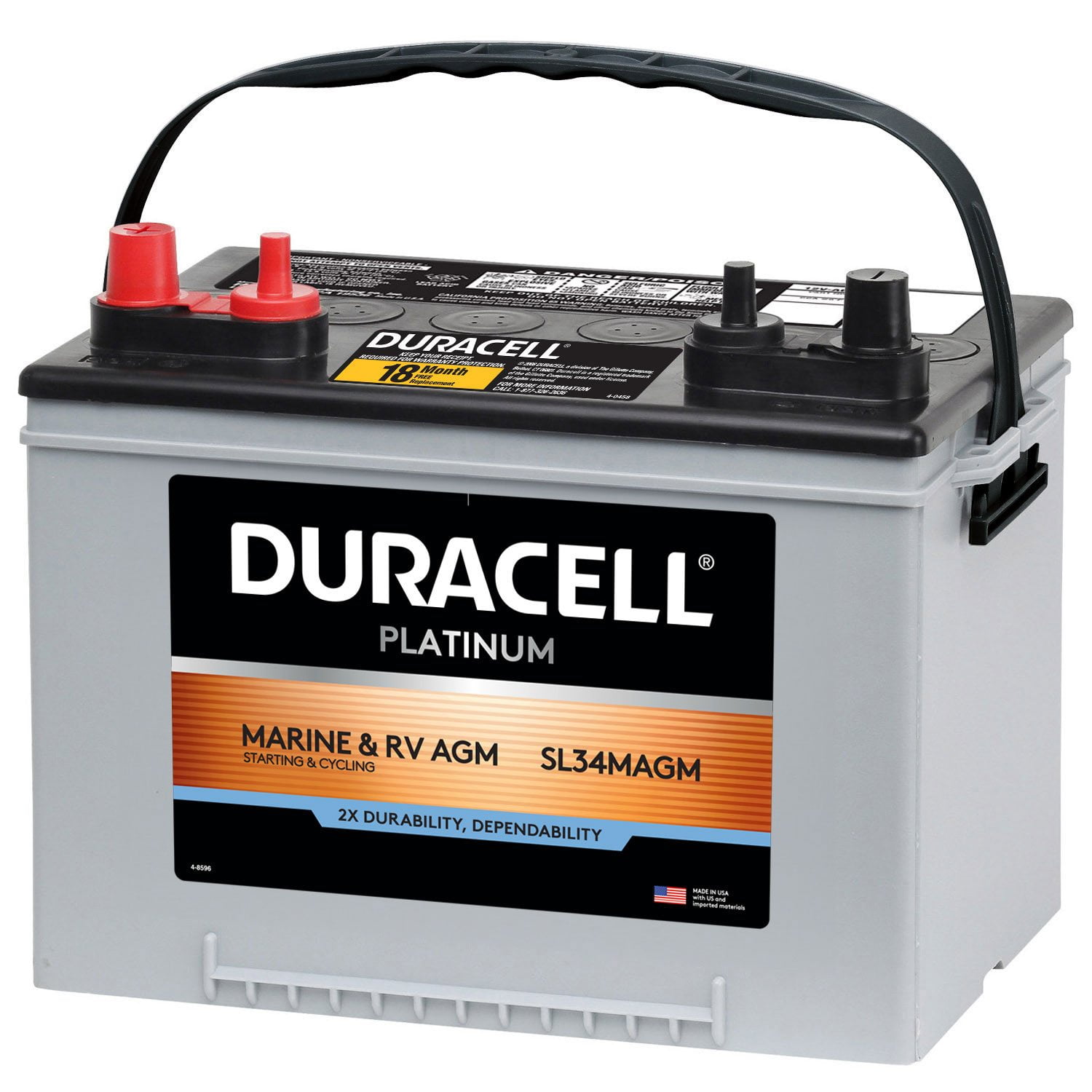
I wouldn't replace the AGM's unless you think they are bad. I would re-install AGM's. I buy Duracell Marine AGM Group 27 (house) and Group 34 (each engine and 4th battery for thruster). All from Sam's Club-great price.
 
Last edited:
Not exactly an apples to apples comparison, but I bought my boat back in October of 2021, of which in the fall of 2023 I got a low voltage warning as well when taking my boat out of the water for the season. So, I figured it was time to replace the batteries, as I bought the boat with batteries of an unknown age, where they didn't have date codes on the stickers or anything. The applicable portion here would be that I called up my local Grady White dealership and asked them about which batteries I should replace the current ones with, of which they said to buy new batteries of the same size, style and material as what I currently have. My boat came with two Group 24 starting/cranking wet cell batteries, and that's what I replaced them with... two Interstate brand 24M-XHD batteries.

I brought up the AGM battery question to them, if it was worth spending more money and buying that style of batteries instead. Of which the tech mentioned that he wasn't a huge fan of the AGM batteries. He said that they seem to be rather temperamental, and might get you 2-3 seasons at the most of battery life. But that they are very sensitive to vibration, stress, bouncing around on boats, etc, and he said they've had several come back that they had to replace because they failed prematurely. Long story short, he said I could spend double the money and get roughly about half the working battery life out of an AGM compared to wet cell batteries. But he instead recommended that I spend half the money, get a good wet cell battery that should last for 5-7 seasons instead. At the end of the day, your boat, and especially I imagine the batteries being only a year old are still very likely under warranty. If your local Grady White dealer is recommending you swap the "old ones" out for new wet cell batteries, I'd listen to what they have to say. Good luck!
 
Last edited:
I use all AGM batteries on my 1997 Islander with 2006 Yamaha F150's. ProMariner 3-bank HD charger and one Noco single bank for the bow thruster.
All these batteries are Duracell AGM Marines - 3x34M AGM and 1x27M AGM. All bought thru Sam's Club.

The batteries are made by one of the largest battery manufactures (Eastern Penn).

Life is around 5-years which is all you should expect from ANY battery type.

If you are going with AGM's you need to be sure you can match the charging profile. My 2006 Yamaha F150's work just fine with these AGM's. Same with above chargers.

I don't know about you but it is not easy to check electrolyte level on mine. Battery is underneath switches - has to be unstrapped and grounds removed to slide out (GW factory design). Given the choice of unmaintained wet cells or sealed AGM I'll take the AGM's! And I don't think there is much of a premium $$$ on the Duracell AGM's.

www.samsclub.com

Duracell AGM Marine Battery, Group Size 27M - Samsclub.com

Buy Duracell AGM Marine Battery, Group Size 27M at Samsclub.com
www.samsclub.com
www.samsclub.com
$199.28


www.samsclub.com

Duracell AGM Deep Cycle Marine and RV Battery, Group Size 34M - Samsclub.com

Buy Duracell AGM Deep Cycle Marine and RV Battery, Group Size 34M at Samsclub.com
www.samsclub.com
www.samsclub.com
$134.86
 
Last edited:
Before you replace anything you need to check voltage at the batteries and check tHe fuses between the charger and the batteries. This will help you figure out where the problem is.
 
I replaced all wet cell batteries with AGM on all my boats and vehicles i have and had.
From then, 10 years ago i don't have dead batteries even not after 6 month not charging over winter and just bought a AGM to replace the 2023 Toyota Hilux EFB (Enhanced Flood Battery) who went dead after 3 years even if i use the Hilux daily for at least 10 miles.

However, actually i have 2 AGM and one LiFePo in my Canyon, 2 in my trucks, 1 in the agriculture tractor, but had about other 15 more over the last 15 years in cars and my other now sold boats here in Sardinia or in Costa RIca.
Non of those AGM failed prematurely while wet-cell did get damaged by not charging when i was away for 6 month working either in Sardinia or Costa Rica.
Brands were Optima Red, Yellow and Blue top (Venture 34), Varta Silver (actual mid size pickups and tractor), Banner (RAM 1500) plus some Italian brands on the 30ft RIB and other sold boats.

I definitively never ever will go back to wet-cell except i have to like the huge battery for my Backhoe not available as AGM.

The biggest advantage of AGM over wet-cell is that AGM don't produce hydrogen what can explode with obviously fatal consequences. Personally saw that on a car and rescued and hosted a Finnish sailor whos battery bank exploded and set the boat on fire. A particular important detail on a boat where batteries are sored inside more or less airtight compartments.

Chris
 
Last edited:
The "bad" AGMs should be replaced with new AGMs. If the new AGMs fail, then there is an issue that MUST be resolved.
 
I brought up the AGM battery question to them, if it was worth spending more money and buying that style of batteries instead. Of which the tech mentioned that he wasn't a huge fan of the AGM batteries.
It seems that you got the unexperienced one of the techs.

1. AGM batteries are much more vibration resistant than wet-cell
The compressed plate packs and close-fitting separators make AGM batteries particularly resistant to vibrations and shocks. This makes them the ideal choice for off-road vehicles, motorcycles or boats, where they function reliably even under demanding conditions

2. Every article about lifespan of AGM batteries write 3-6/7 years under good conditions what correspond with my experience
  • heat is not a issue in a boat, but f.e. in the engine bay of a car
  • wrong charger is a issue for any battery (but not OP's problem as his ProSport detect the AGM)
  • Frequent discharge/charge cycles are a problem and not good for all batteries what may lead to premature failure for some and for others not. This is uncommon for boats but can happen on fishing boats where it may be better to let the engine/s idle instead of stop and start every f.e. 10 minutes. If this is required then a Start/Stop certified AGM should be used.
  • Frequent deep discharge is poison for any battery but i expect OP has his Freedom attached to shore power when not in use.

I don’t know if it’s a charging problem (the ProSport is correctly recognizing the AGM batteries however) or bad batteries.
That 2 or 3 batteries die and are not able to charge again is very uncommon, but can happen is from same bad batch.
I would expect you have the typical GW battery setup, is this correct?
STBD engine -> 2 batteries tied together for stbd engine and house
PORT engine -> 1 battery for port engine
All batteries you have installed are AGM, correct?
How do you use your boat and do you hook up shore power when not in use?
Did you drained the batteries to very low level over the winter?

I would first check the ProSport charger as this would be the only device to kill contemporary 3 batteries in one year, others mentioned to had problems with them.

Chris
 
Mustang, someone fed you a line of ....well, you know what!
The last set of Duracell Group 31 AGM's lasted over 13 years for the house batteries. They still worked and tested right at the lower limit on a carbon pyle load test, so in essence, still going, but I replaced as I was getting nervous.
The starting batteries, same one's I changed at 6 years for same reason, did not want any issues.
I place all my batteries on a piece of rubber exercise mat to help isolate any shock, but as said above, they are the toughest batteries over a flooded cell anyday!
 
Mustang, someone fed you a line of ....well, you know what!
The last set of Duracell Group 31 AGM's lasted over 13 years for the house batteries. They still worked and tested right at the lower limit on a carbon pyle load test, so in essence, still going, but I replaced as I was getting nervous.
The starting batteries, same one's I changed at 6 years for same reason, did not want any issues.
I place all my batteries on a piece of rubber exercise mat to help isolate any shock, but as said above, they are the toughest batteries over a flooded cell anyday!

I had an Optima red top battery for my 1965 mustang that lasted over 10 years and then started failing rather quickly, so I imagine it is still likely possible for AGM batteries to last that long. But I have also heard since I bought that battery, that Optima has since switched to a different source for their batteries, and that some of their batteries are now having longevity issues because of that. It's great that your batteries lasted as long as they did, I was told the above mentioned information from my local Grady White dealership. So, I don't really have any reason to suspect foul play or anything close to it, I'm honestly just going off what they told me. You, the OP, as well as everyone else on here are more than welcome to do your own research as well as buy whatever batteries, or any other items, you'd like for your car, boat, RV, etc. Again, I'm just going off of what I was told from my local Grady White dealership, who I'd say is likely fairly knowledgeable in regards to the topic at hand. Another suggestion that I'd have though would be to look at the above links from Sam's Club for the Duracell brand batteries, of which for the Group 34M Duracell battery there are 53 ratings with an overall score of 3.5/5 stars. If you read the ratings and/or reviews, they have over 30% of those reviews being a 1 star rating with almost all of those 1 star ratings complaining about premature failure, most of which take place at 2 years or less. I don't know about you, but I personally would rather not gamble at having essentially a 1 in 3 chance of having my batteries fail prematurely on me when they're less than 2 years old. Just my thoughts on the matter, of course.
 
Last edited: