
Wrong Way Corrigan

kas919

Active Member
Joined
Dec 9, 2025
Messages
27
Reaction score
1
Points
3
Age
62
Location
Venice, FL
Model
Freedom 285
I rarely get out of site of land, but I am noticing that my Garmin MFD and my Ritchie Compass are not reading the same heading. I would say it may be off as much as +/- 20 deg. I was thinking the other day that I should probably figure out who to believe. Of course we all assume that GPS is never wrong right? Should I have the compass professionally calibrated? Any thoughts or wisdom would be greatly appreciated. Thanks
 
Depending on the model of your compass, there could be adjustment screws on it.
 
 
First check to see if you have your Garmin set to read "magnetic" as opposed to "true north".

Second... do you have any speakers/etc (sources of magnetic disturbance) close to the compass?

With the boat in your slip, does turning the wheel affect the compass? Does using/turning on any nearby electronics affect the compass?

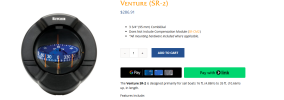
Then, yes, follow the compensation procedure (plenty of info out there about this). Look for two brass (usually brass) screws on the back side. This is a normal thing to be done based on where someone boats.
 
Last edited:
  • Like
Reactions: SkunkBoat
Based on the OP location, the declination would be about 10 degrees so that doesn't explain the 20 degree difference.

One simple test for magnetic interference is to turn off all battery switches and note the compass heading. Not turn on the battery switches, note the heading again. Turn on things one at a time and look for changes, Don't forget the stereo if you have one, especially if there are speakers mounted close to the compass.
The above test will test for electromagnetic interference, the speakers can cause both magnetic and electro magnetic interference.
Phone chargers, magcase phones, magnetic mounts, heavy current cables and the like are all possible sources
It could be adjustment as noted but test for magnetic and electromagnetic interference first
 
When you are traveling in a channel and your chart shows you in the channel, the GPS is correct.
When you are offshore and you see Venice to the east on your chart and your track takes you back to the inlet, the Garmin is correct.

Compasses are notoriously inaccurate due to things that Dennis mentioned and the declination in venice Fl is about 8 degrees west

I never use a compass anymore. Your Chart allows you to see where you are going and where you've been vs pointing in a direction and trying to watch a compass and drive.
I wouldn't spend time or money trying to make a compass "correct" but yes you should figure out if there is something nearby effecting it.

You probably have a compass on your smartphone you can compare to.
 
Kas, you can get your Garmin to do a self-check on its compass readings by finding an area with calm water and drive your boat in slow 360 degree circles at least twice, taking one minute or more per circle. I live in Venice, Florida also and when I do this when syncing the compass with the autopilot, I go to Roberts Bay, about a half mile south of Snake island. It's protected water and there is a wide area outside of the ICW channel to mess around. Also, what SkunkBoat said is a good idea, turning on the compass on your smartphone and comparing it to your compass and to the reading on your chart plotter to see who is lying.
 
To be accurate, if using a magnetic compass,(wet compass) you need to develop a compass deviation card. It will tell you the difference between your compass reading and actual magnetic heading at the various quadrants. The GPS does not provide heading. It provides course over ground. Not that significant in a boat, but real significant in an airplane with a crosswind so think of it that way. Your heading comes from a compass, your course over ground comes from your GPS. Your auto pilot, if you have one, has some sort of heading sensor associated with it and that may be where you see the heading that is transmitted to your multifunctional display. Most earlier auto pilots use a magnetic compass that is known as a Flux gate compass. It is a fancy magnetic compass that provides an electric signal to your auto pilot. There are also GPS corrected heading sensors such as the Garmin 24Xd that use special sensors to provide magnetic heading.
 
Last edited:
The GPS can guesstimate your heading accurately by looking at your COG - course over ground. Problem is when moving slow - maybe you are fogged in somewhere and in a current - maybe trying to get thru a bridge. Your chart plotter map will spin around and be useless and dangerous. Same with radar. To fix that you need a magnetic heading sensor of some sort.

I have a Garmin 24xd GPS that includes a magnetic heading sensor. Garmin offers a SteadyCast magnetic heading sensor for under $200. The heading sensor is really important to have with a chart plotter and radar equipped boat. If you have a recent mode autopilot you likely have a heading sensor already.

I do use my magnetic compass for a quick idea of where I'm headed but it is "off" in certain quadrants. It works well enough though that if I lost all my electronics while offshore I could get back to land.

Should I have the compass professionally calibrated? No - what you should do is get in open water on a nice day - pick a heading - say 0 degrees - run a little and note the commas heading and the COG. Turn 30 degrees and do it again (you could turn around and do any heading just try to test most/all 30 degree offset headings. If anything is off more than 5 degrees you could follow the instructions that came with the compass.
 
Last edited:
The GPS can guesstimate your heading accurately by looking at your COG - course over ground. Problem is when moving slow - maybe you are fogged in somewhere and in a current - maybe trying to get thru a bridge. Your chart plotter map will spin around and be useless and dangerous. Same with radar. To fix that you need a magnetic heading sensor of some sort.
Just set North Up on your chart.. You wont need a compass
 
Just set North Up on your chart.. You wont need a compass
I always run North-Up now on my Garmin units. That will prevent chart plotter from spinning. I guess the radar too. The boat will spin though. And how do you know where North is without a compass?

That encounter I had above was 30 years ago with my Egg Harbor after nighttime fireworks. Got fogged in at the two-mile bridge with big commercial fishing boat Drysden coming under the bridge with strong current. Probably course up.
 
I always run North-Up now on my Garmin units. That will prevent chart plotter from spinning. I guess the radar too. The boat will spin though. And how do you know where North is without a compass?

That encounter I had above was 30 years ago with my Egg Harbor after nighttime fireworks. Got fogged in at the two-mile bridge with big commercial fishing boat Drysden coming under the bridge with strong current. Probably course up.
Its at the top of the screen :p I see so many people trying to run a boat with the chart on Heading'Up. Chart spins around when trying to find a wreck. Just stupid....
I change their setting and they say wow what did you do?
So if you are on East coast, the left side of the screen is home, the right side is Portugal

Radar is heading up because it makes more sense. You need a heading sensor for radar to overlay a chart. The heading sensor IS a compass.

My point is you really don't need an old school compass when you have something a 1000 times better right in front of you.
You can create a Nav screen with splits for Perspective/North-up chart/Sonar substitute in radar when necessary.
You set the Perspective (heading up) so it looks just like a lubber line to your waypoint. Don't need a compass. It IS a compass.
 
I agree North-up without a heading sensor will work fine for finding a wreck. The bow direction of the boat icon on the screen won’t be accurate when you crawl up to the wreck but that’s ok.

It’s a great fix for a fisherman.